Health, Safety & Environment
Everyone goes home the way they arrived
Safety is an absolute core value at Al Adrak — integrated into every phase of the construction lifecycle, from mobilization to handover. We safeguard our workforce, trade contractors, project partners and surrounding communities on one uncompromising principle: all site incidents are preventable.
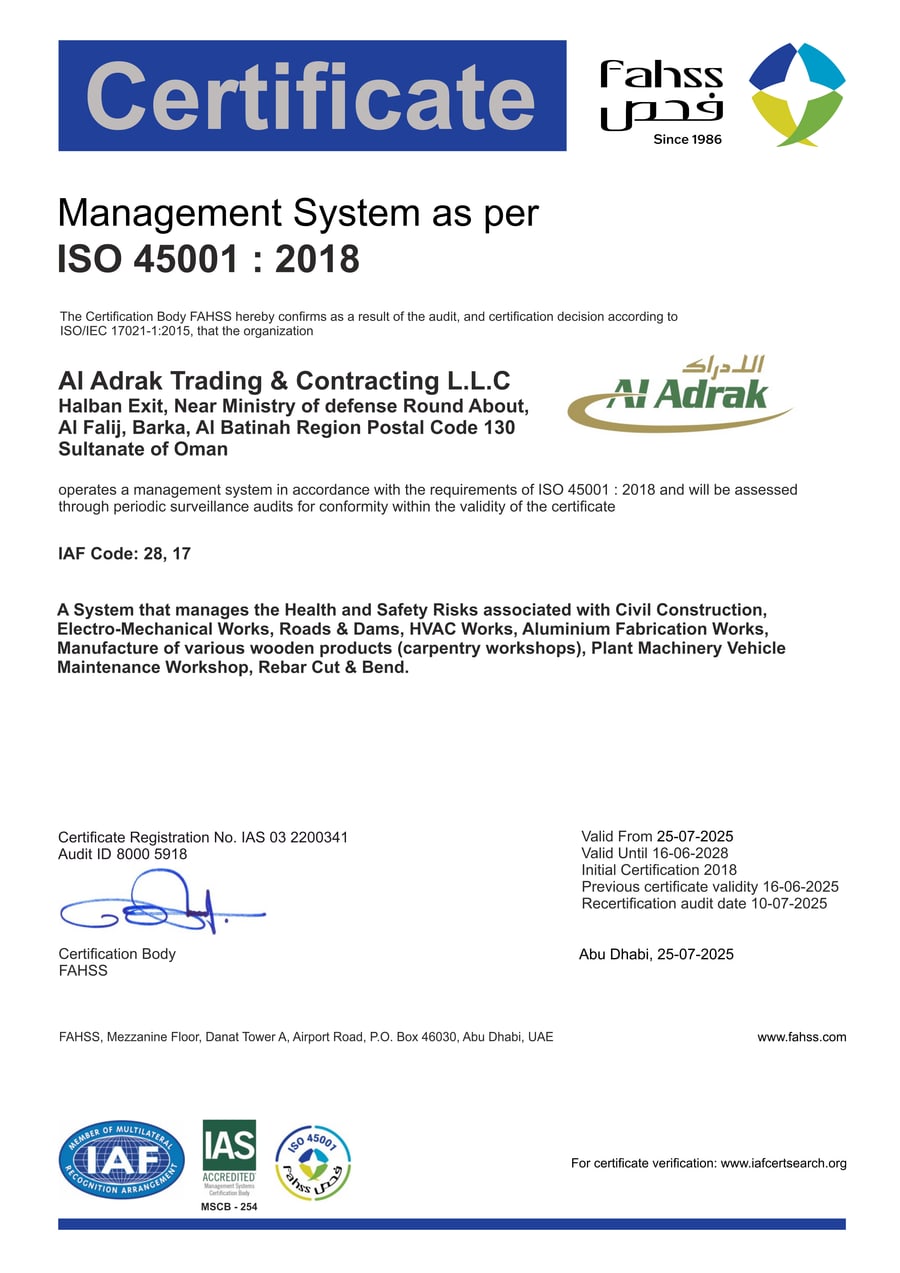
ISO 45001:2018
Occupational health & safety management
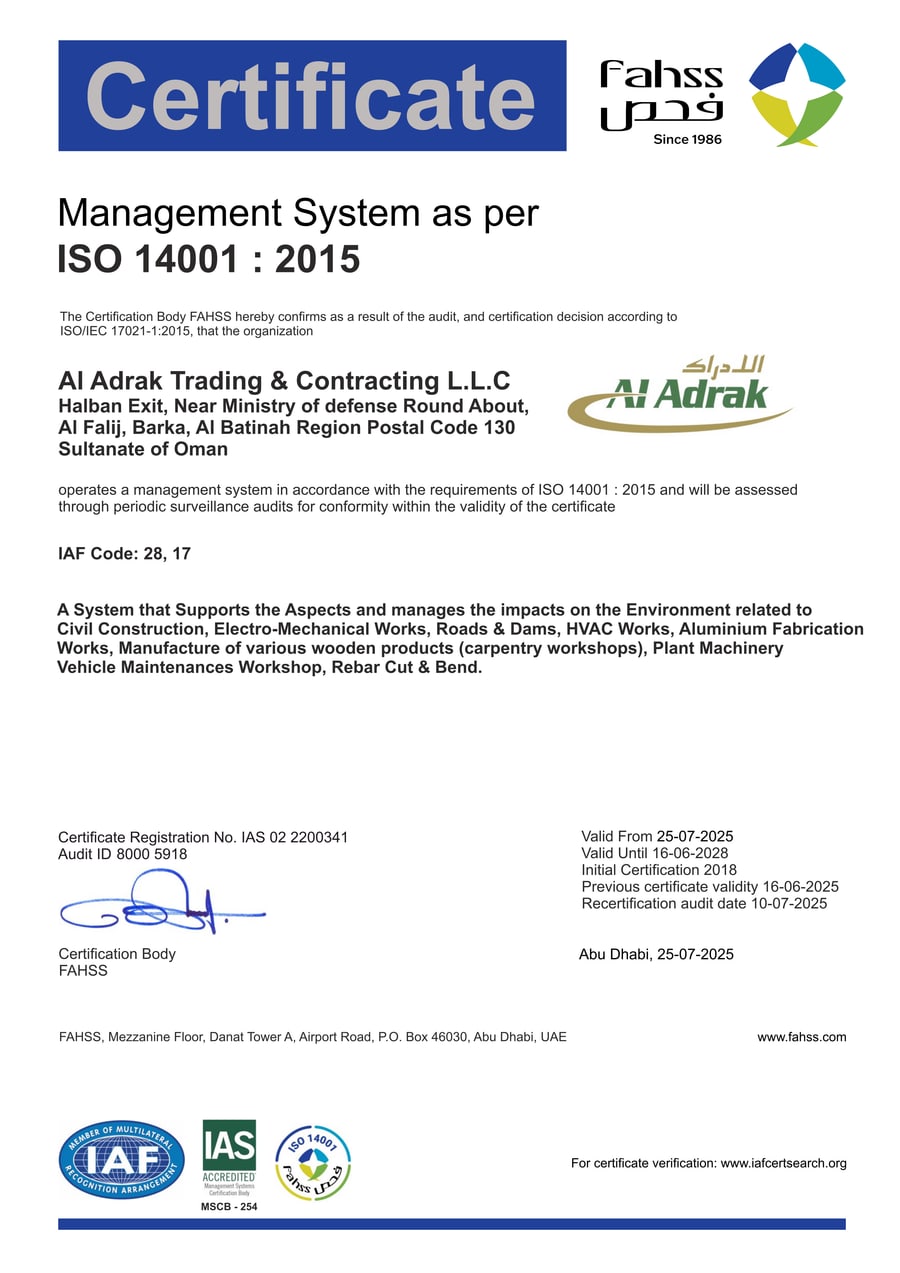
ISO 14001:2015
Environmental management
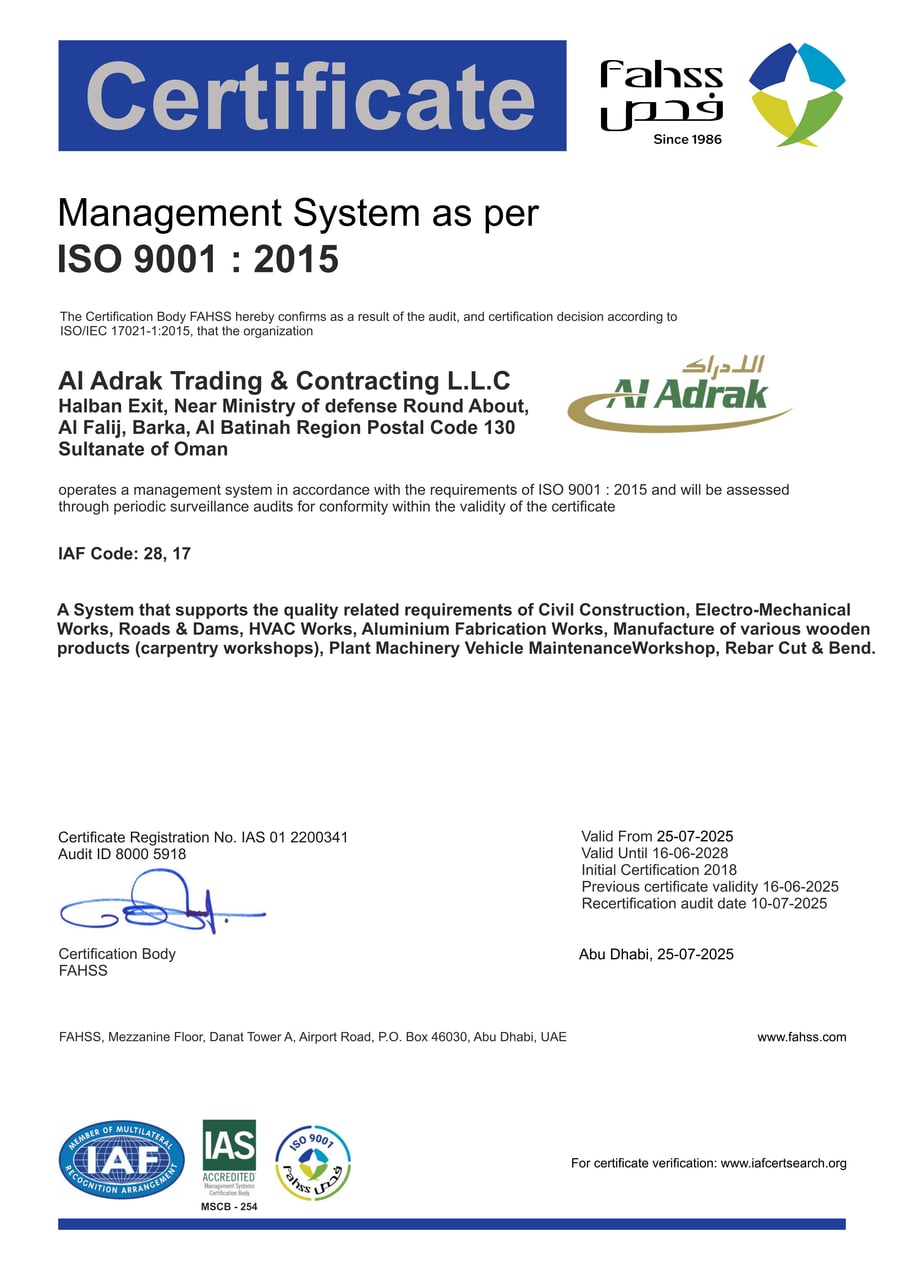
ISO 9001:2015
Quality management
Leadership & culture
Safety is led in person, not delegated
Our safety framework engages every tier of the organization — senior project leadership, site incharges and trade supervisors, and the frontline workforce — under an Incident and Injury-Free (IIF) commitment that leadership drives in person.
The distinction is not a formality. A rule that arrives as a circular gets complied with; a rule that arrives with the person who set it gets believed. The four structures below are simply where that contact is made — in the committee room, on the monthly walk, and in the work zone itself.
Executive engagement
Senior management participate directly in site safety walks, high-risk work reviews and safety leadership workshops — the IIF commitment is led from the top, not delegated.
Corporate HSE Executive Committee
Chaired by top management: monthly reviews of company-wide leading and lagging KPIs, high-potential incidents and systemic lessons learned, alongside monthly executive site inspections.
Project HSE steering committees
Project managers lead monthly site committees of discipline engineers, subcontractor leads and trade foremen — reviewing hazard trends, pre-task planning quality and joint safety walks.
Safety champion network
Dedicated HSE professionals and trained worker safety champions embedded in active work zones across all shifts, coaching, monitoring and recognising safe work in real time.
Non-negotiable
The 9 Life-Saving Rules
Non-negotiable boundaries for everyone on site — Al Adrak staff and trade contractors alike. These nine rules address the activities carrying the highest potential for severe harm in building and infrastructure construction, and 2026's target is 100% compliance across every operational site.
Do not walk under a suspended load
No alcohol or drugs while working or driving
While driving, do not use your phone and do not exceed speed limits
Do not smoke outside designated smoking areas
Work with a valid work permit
Protect yourself against a fall when working at height
Obtain authorization before overriding or disabling safety-critical equipment
Wear your seat belt
Conduct gas tests when required
On site
Controls built into the work, not around it
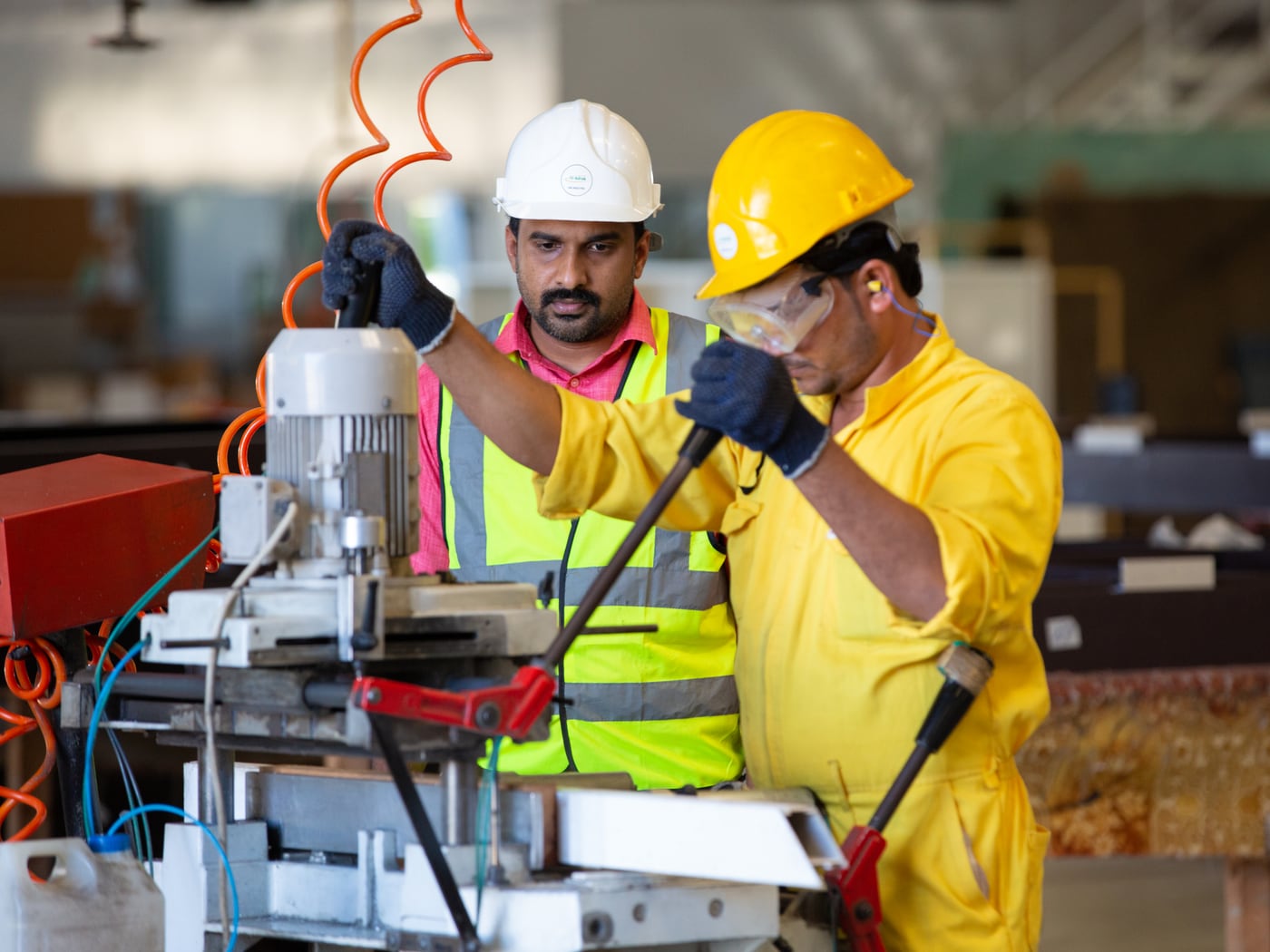
Safety controls are embedded directly into site execution strategy, method statements (RAMS) and daily workflows — hazard identification tools, a strengthened high-risk Permit to Work system, and specialized programs for the work that can hurt people.
- Work at height
- Heavy & critical lifting
- Deep excavation & trenching
- Confined space entry
- Electrical safety
- Hot works
- Temporary works stability
Permit to Work (PTW)
Strict physical permit verification for all hot work, electrical isolation (LOTO), deep digging and overhead crane lifts — before work commences, not after.
IIF at the work face
Pre-task toolbox talks and Daily Activity Hazard Assessments (DAHA), conducted by foremen at the immediate work face before any task begins.
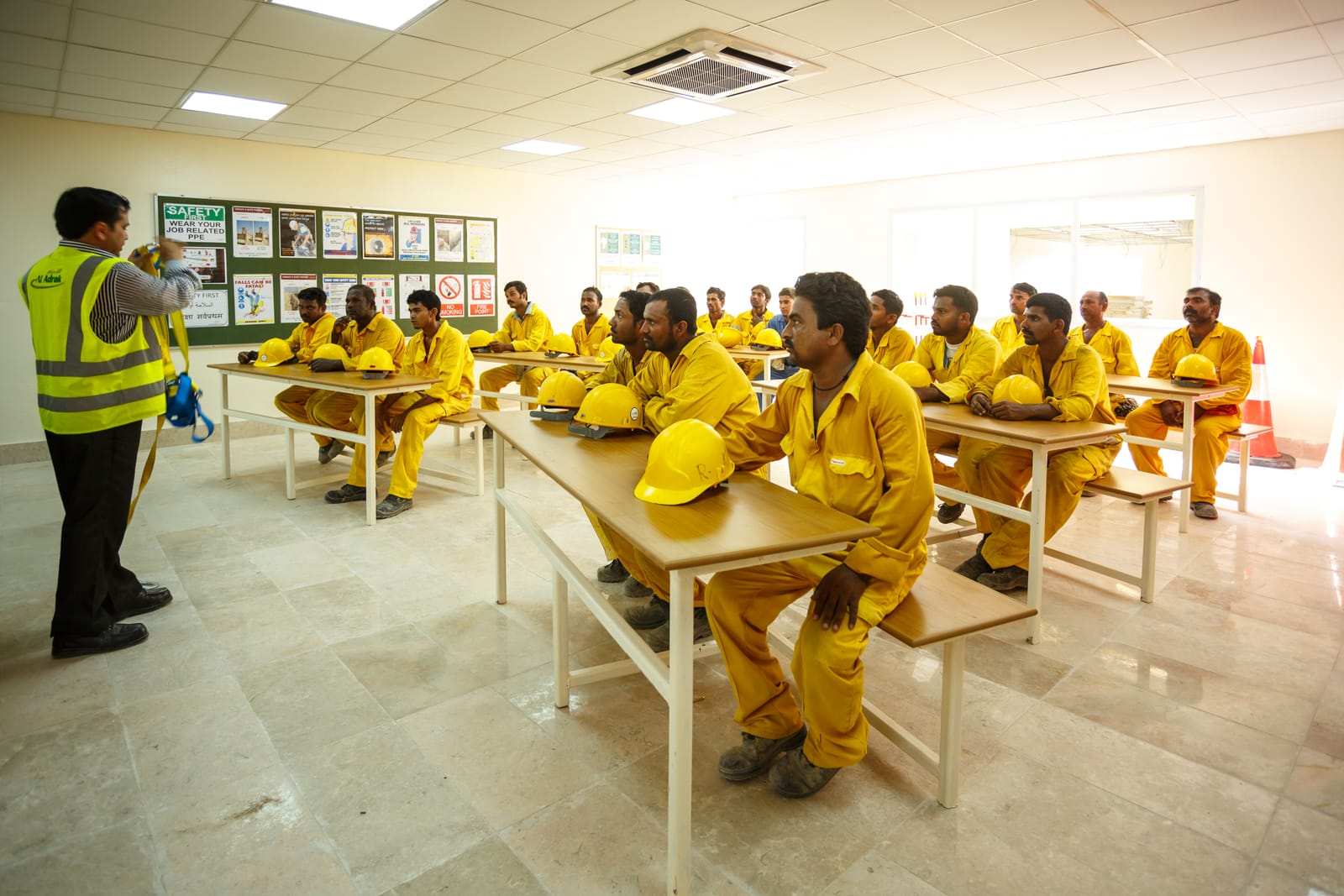
An in-house training centre
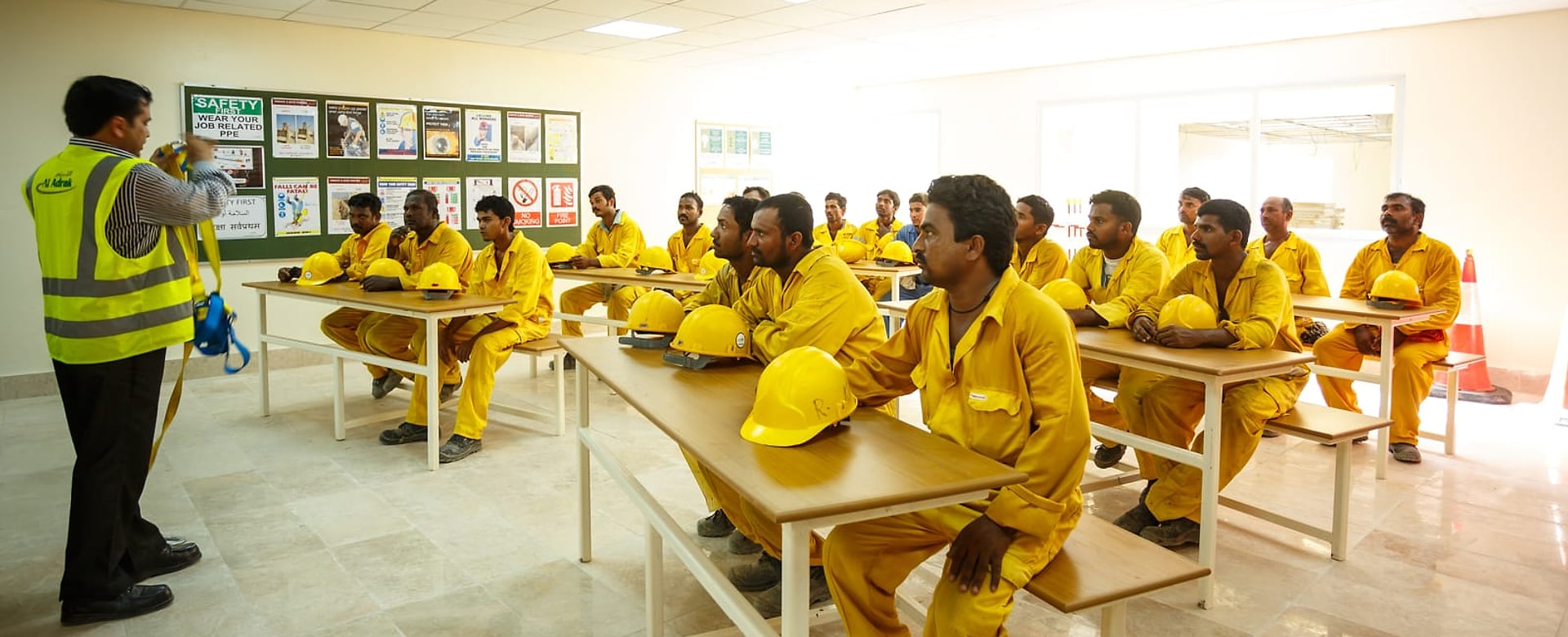
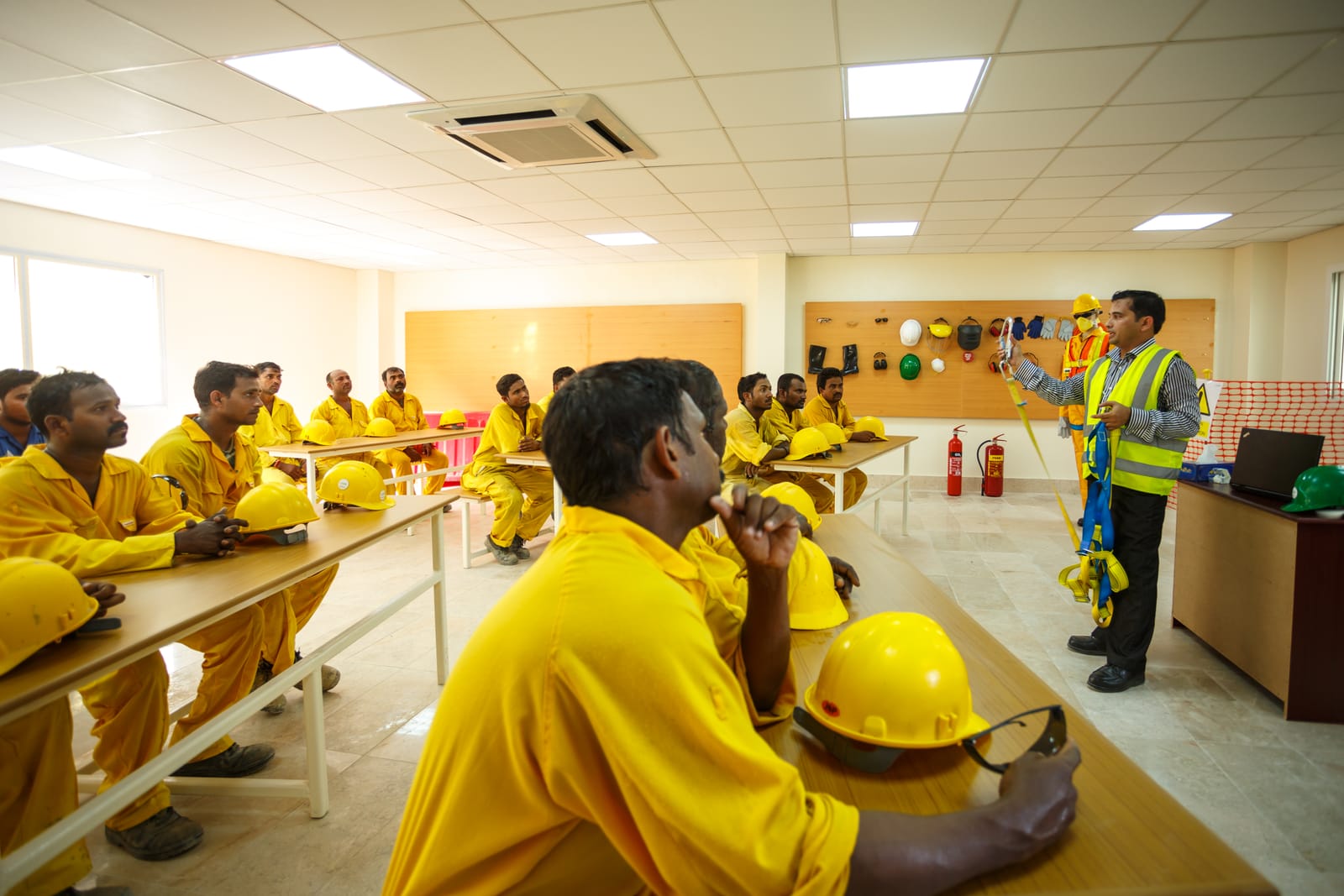
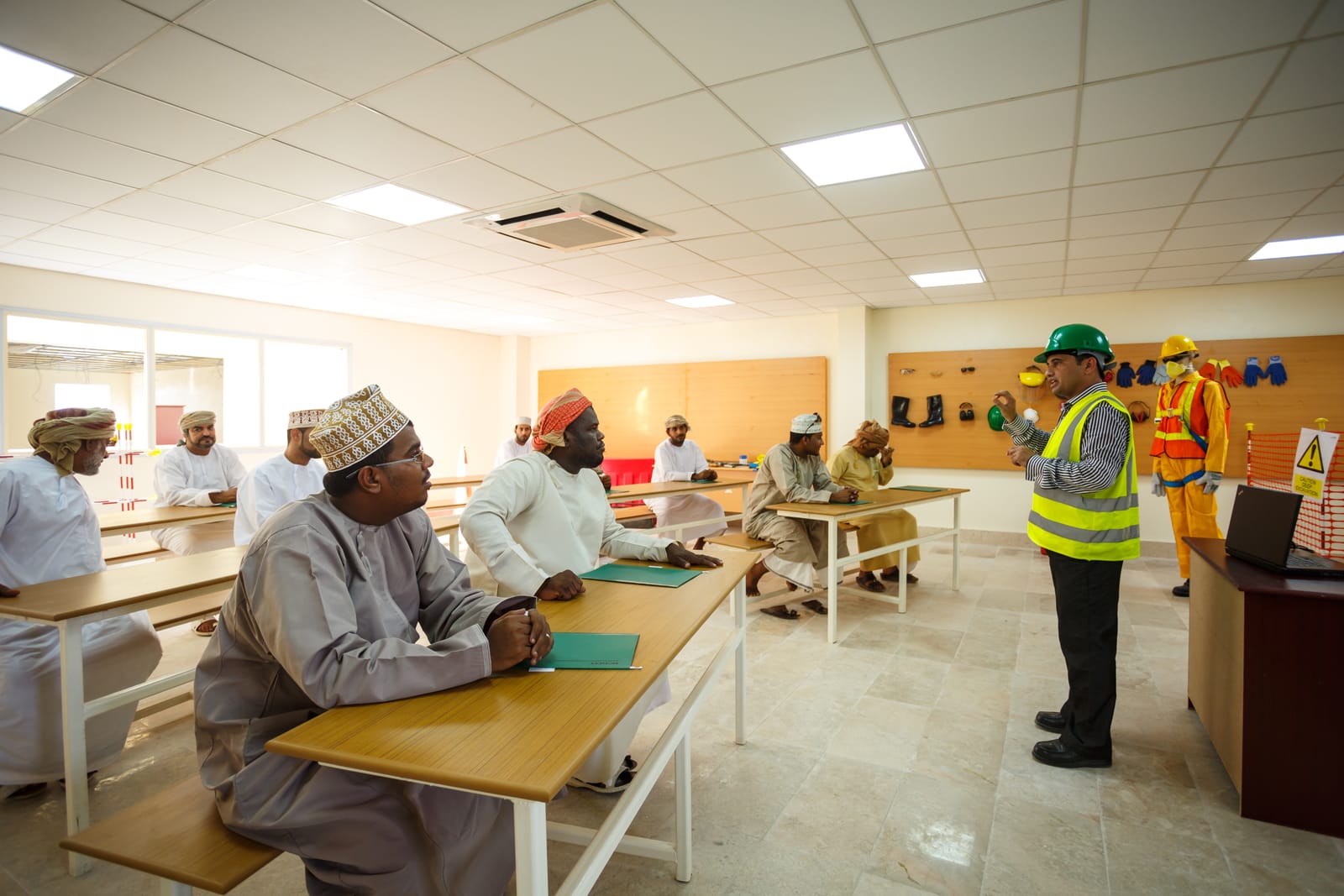
Rather than send people out for certification, Al Adrak built the classroom on its own campus. Inductions, toolbox talks, supervisor sessions and practical assessments all run here, in the languages the workforce actually speaks — so training happens before the shift, not after an incident.
Al Adrak recognizes that in a rapidly changing world, being in tune with the latest technology and skills is the only way to success. We have ensured that our employees have access to the best training facilities to equip them to deliver their best. In-house training facilities cater to the staff with the best teachers and learning environment.
Multilingual delivery
Inductions and critical-risk modules run in the languages the workforce actually speaks — Hindi, Urdu, Bengali, Malayalam and English.
Learning & HSE tracking portal
Supervisors and project managers track mandatory certifications, refreshers and site clearance status on a centralized portal.
Practical field modules
Working safely at heights, scaffolding inspection and usage, rigging and slinging, defensive driving for heavy plant operators, mock drills and emergency response.
In practice
Six things that happen on every project
None of the six is optional and none is project-specific. Whatever the job — a hospital, a highway, a data centre, a workers' village — they run the same way and in the same order: nobody sets foot on a site before the first of them, and the last one is still running as the site is handed back.
Induction before the first shift
Every worker and every subcontractor is inducted before they set foot on a site — the hazards of that specific project, the rules that apply, and who to stop work with.
Weekly toolbox talks
A briefing at the workface every week, on the work actually in hand — the hazards of the current stage, what changed since the last talk, and what to watch for in the days ahead.
Working at height
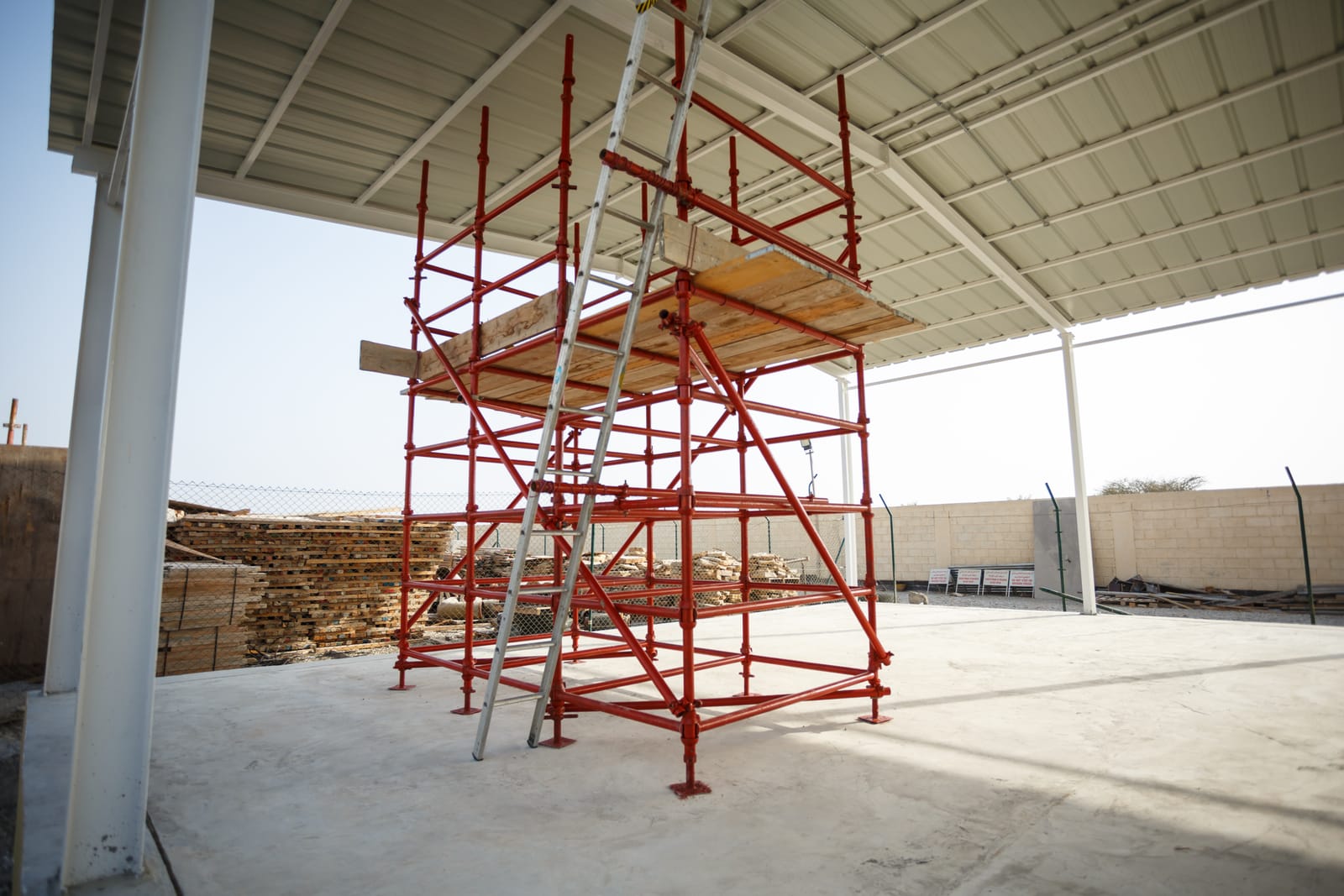
A purpose-built scaffold rig on the campus, so erecting, inspecting and working from a scaffold is practised on the ground before it is done at height.
Personal protective equipment
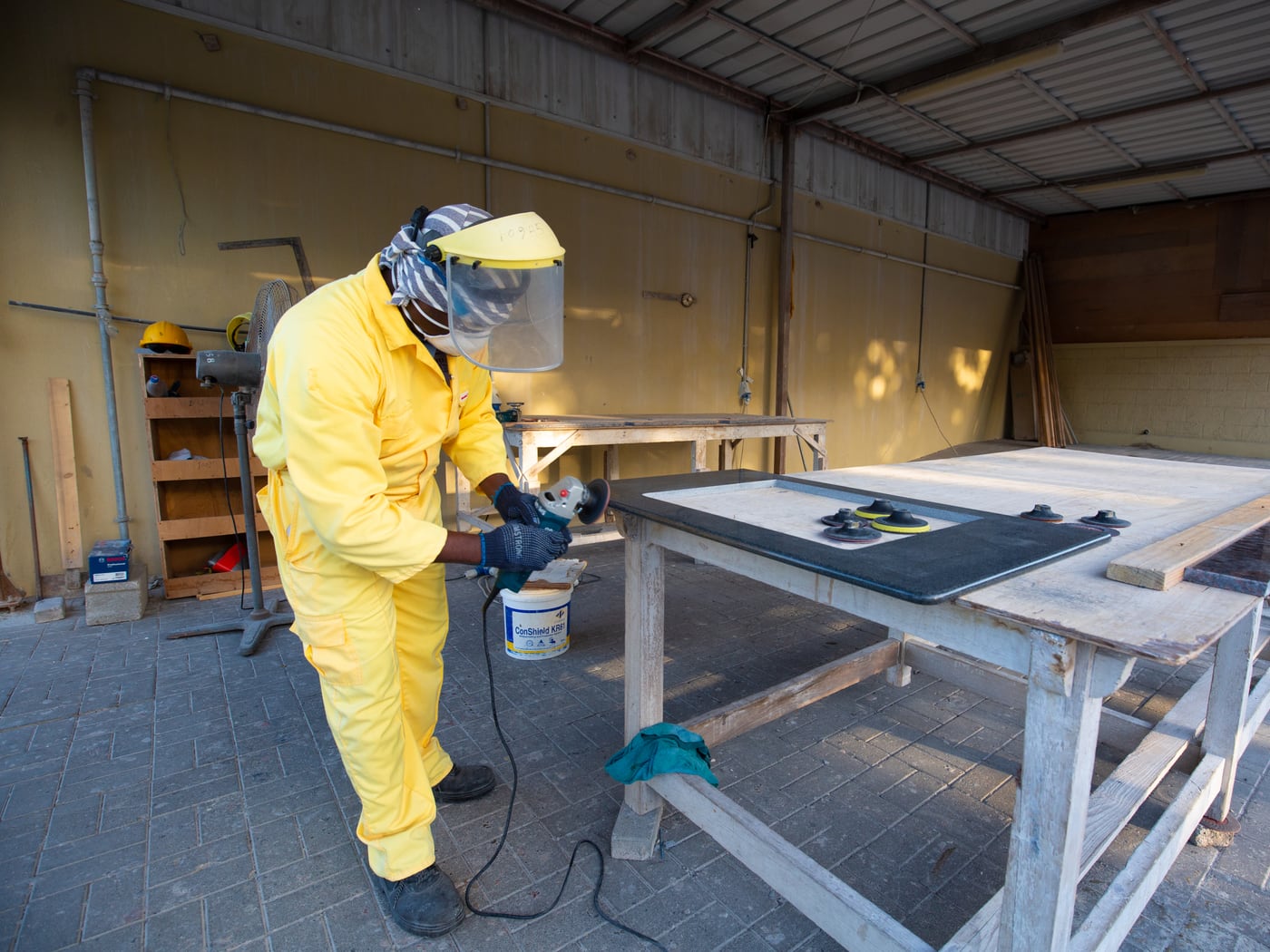
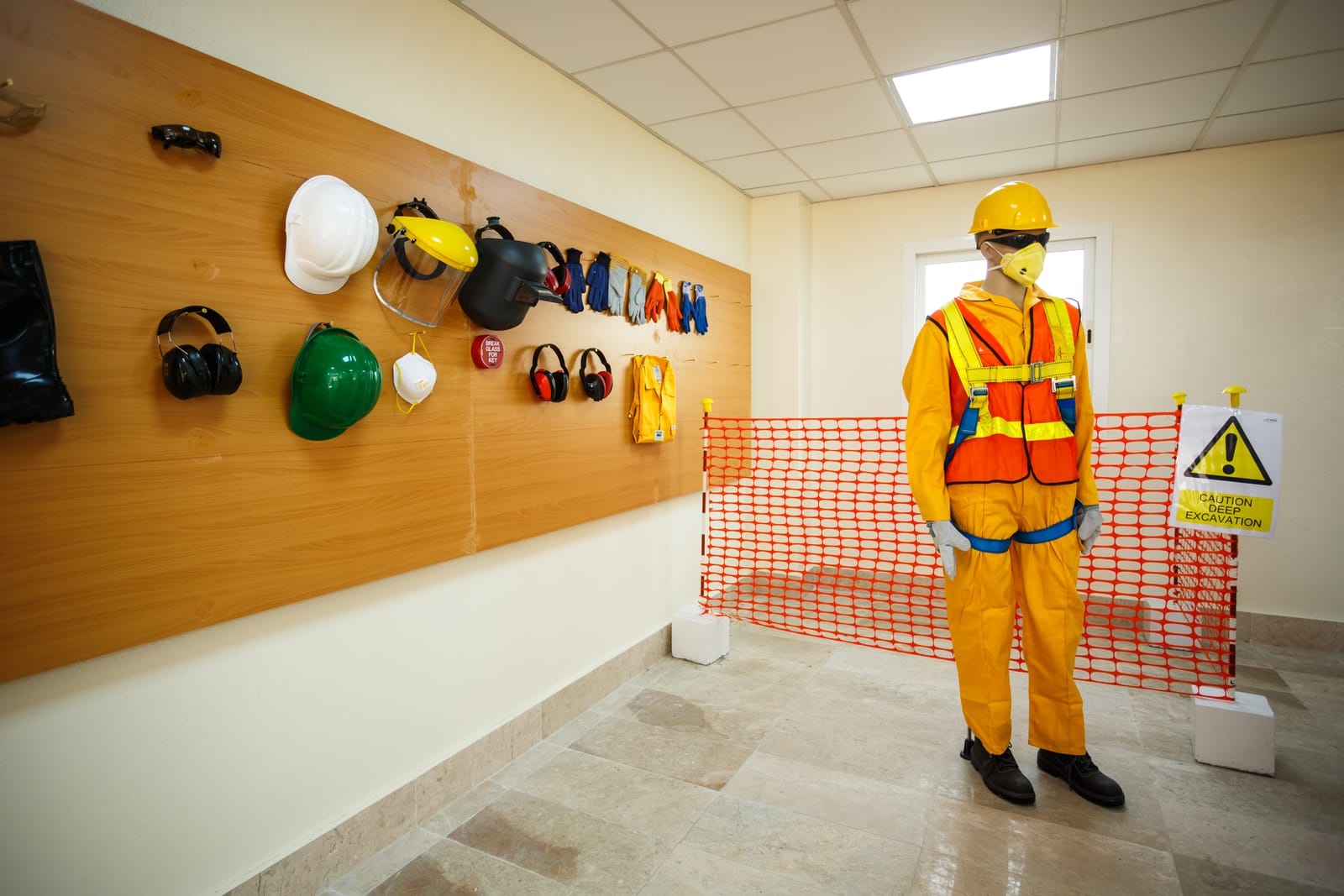
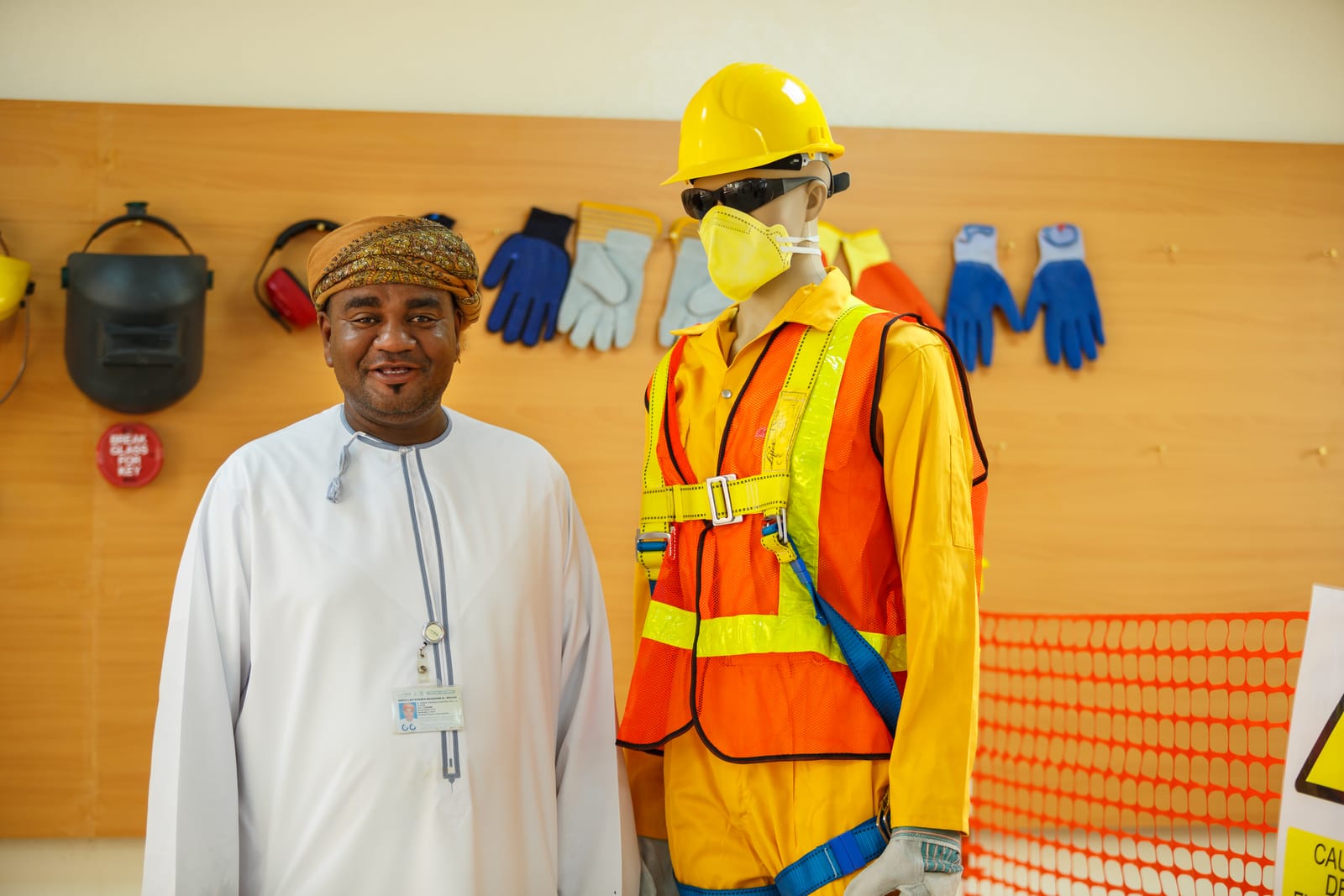
PPE is issued, fitted and checked — the training centre's equipment wall shows exactly what is required for each trade, and what good condition looks like.
Emergency response
Fire drills, extinguisher handling and first-aid training, so the response to an incident is practised rather than improvised.
Environmental care
Waste segregation, dust and noise control, and protection of the ground and water around every site — the commitments behind the ISO 14001 certification.
Everyone on site
One system, whoever the employer
Al Adrak's own crews and the trade partners working alongside them answer to a single HSE management system and a single medical standard. The two columns below are how that is enforced — before anyone is mobilised, and for as long as they stay on site.
Trade partners
One system for everyone on site
Specialized trade partners perform significant volumes of site execution, so every subcontractor is integrated completely into the Al Adrak HSE management system — same rules, same training, same boundaries. A trade contractor on an Al Adrak site is held to the standard the company holds itself to, and is inducted, evaluated and monitored the same way.
Pre-qualification & onboarding
Strict pre-qualification on historical HSE performance, safety management capability and equipment maintenance records.
Heat stress management
Thermal Work Limit monitoring and structured summer protocols — work-rest regimes, shaded break areas and hydration stations — enforced across all trades.
Mandatory verification
No subcontractor craftsman sets foot on site without the Al Adrak HSE induction and a Life Saving Rules evaluation.
Occupational health
Fit for the trade, checked on site
Strict medical governance ensures everyone is physically fit for their designated trade — aligned with national labour law and OSHA/ILO occupational health standards.
Fitness-for-duty screening
Pre-employment and periodic trade-specific medicals — vision tests for crane operators, vertigo and cardiac checks for work at height, audiometric testing.
On-site medical hubs
Site clinics and first-aid stations staffed by licensed medical personnel — emergency triage, minor treatment and routine wellness checks.
Proactive health campaigns
Continuous monitoring of fatigue, chronic health risks, hydration and ergonomic wellbeing across camps and project sites.
Wellness Tracking
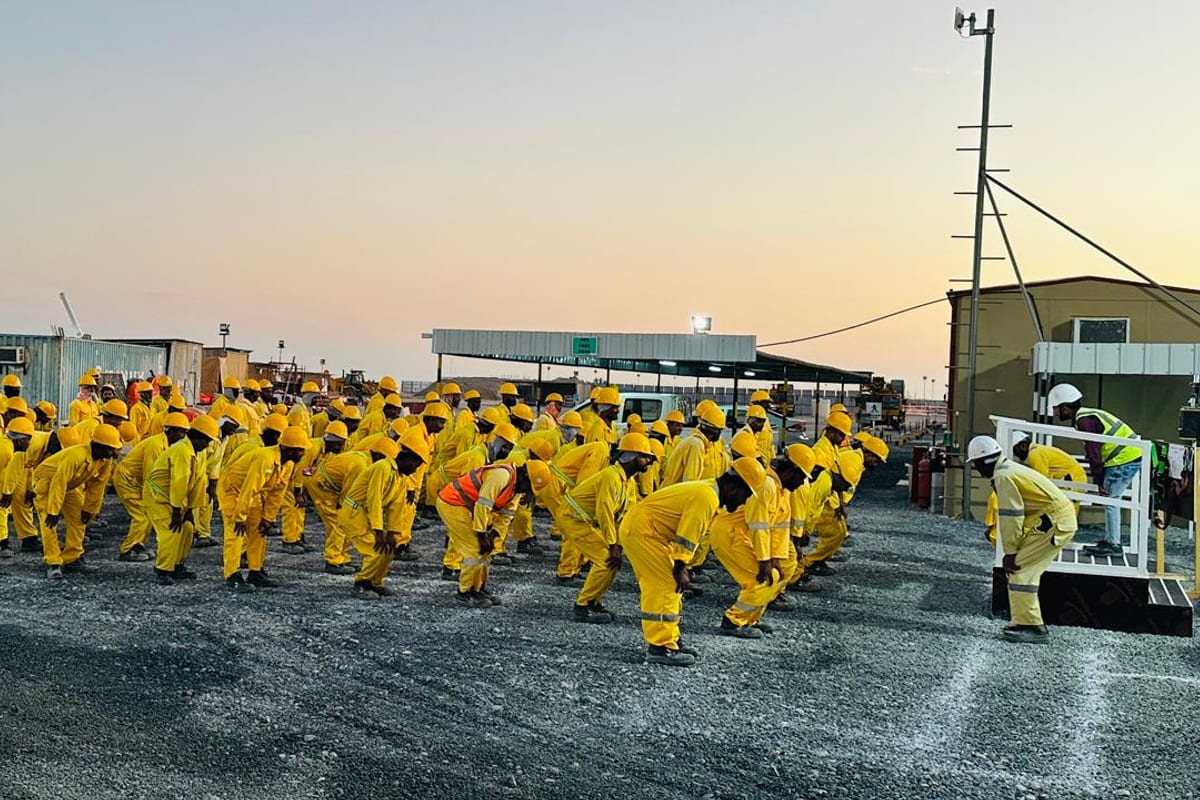
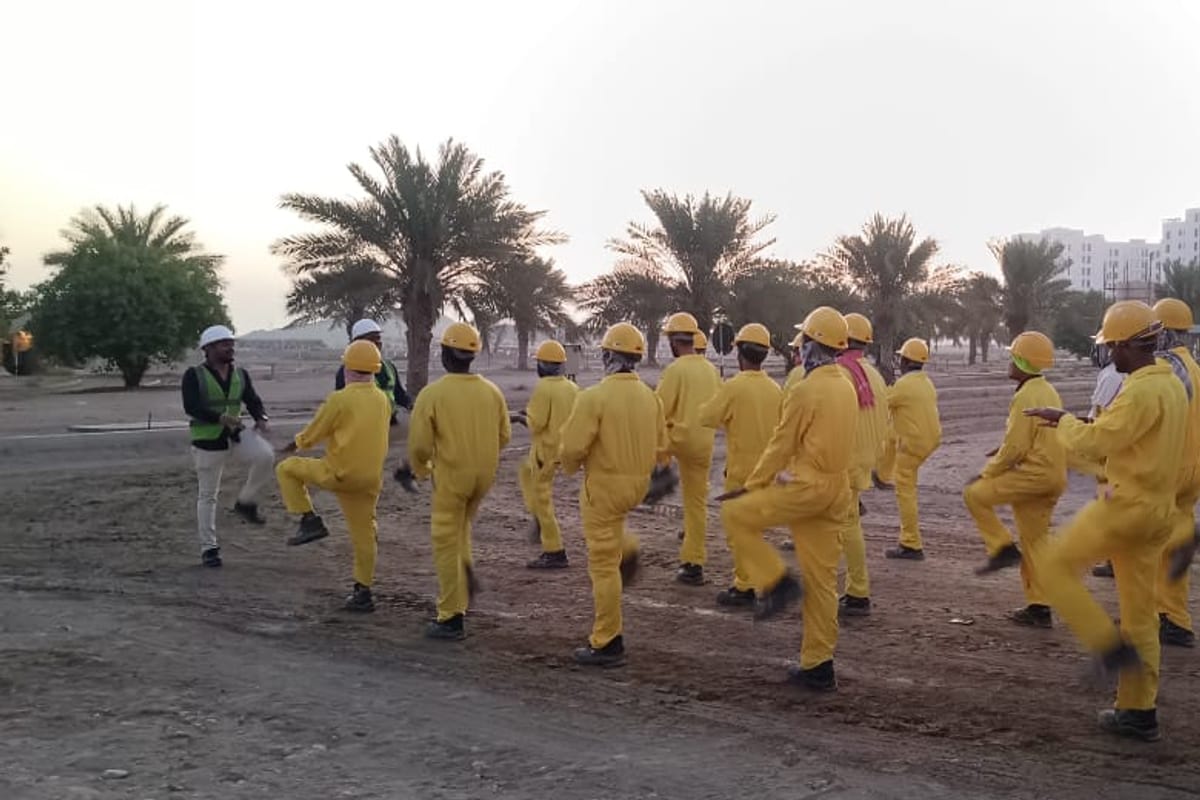
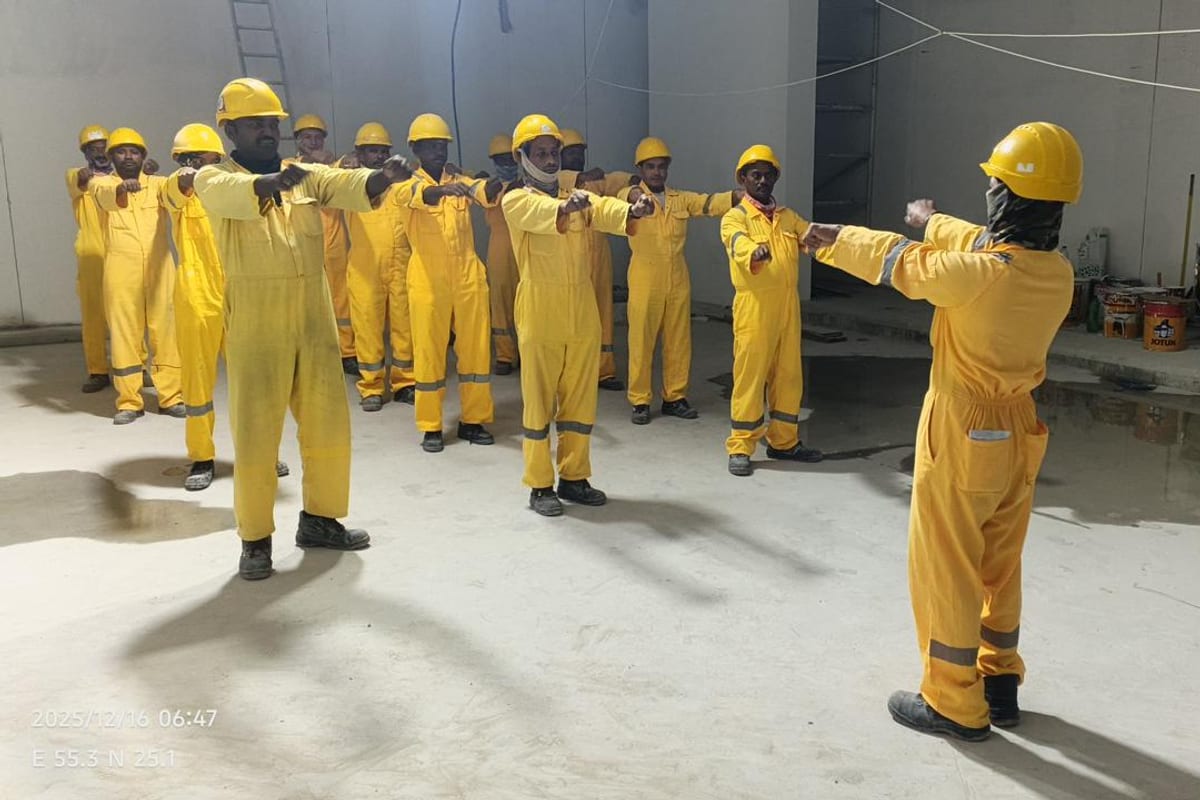
Seven minutes that start every shift
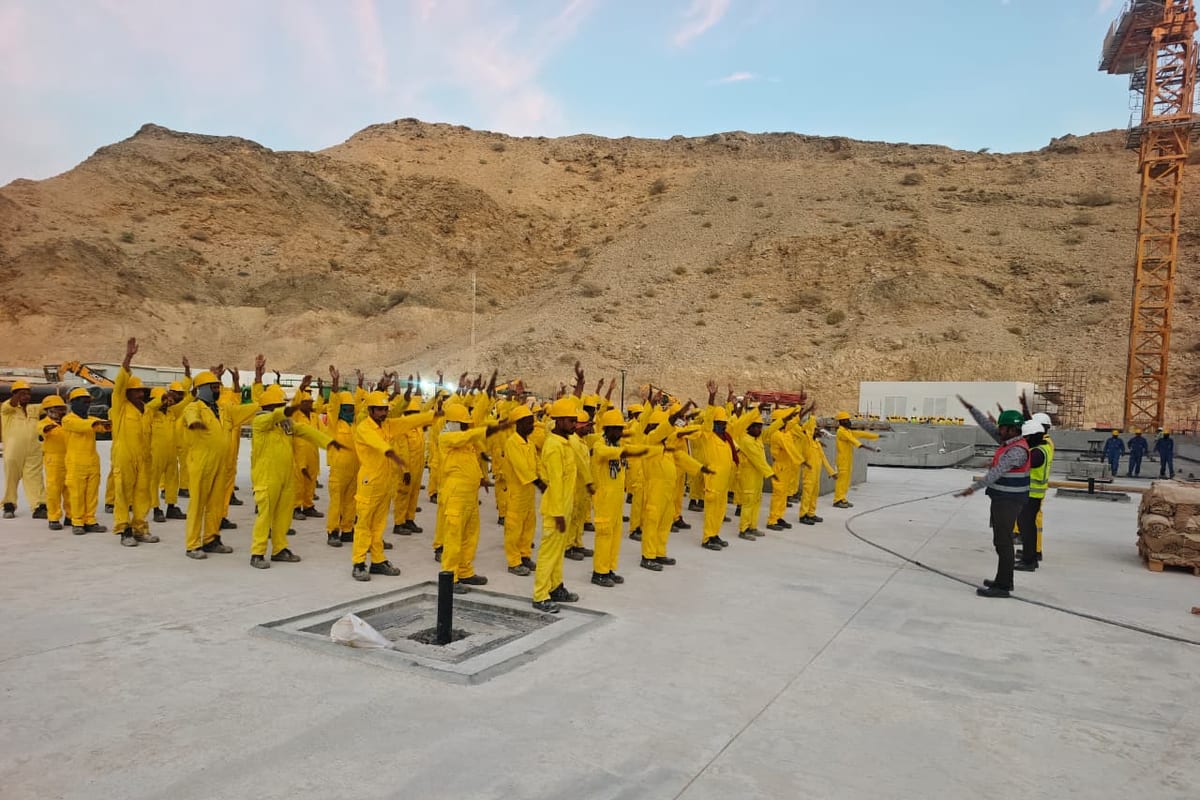
We maintain our cranes and excavators on strict schedules; the human body deserves no less. Proposed by the HSE department and backed by the CED, Wellness Tracking dedicates the first seven minutes of every morning — inside the daily PEP talk — to stretching and physical preparation. Warm muscles resist strains, moving together builds one crew out of many trades, and a held stretch is a quiet daily check-in that catches a tight back before it becomes a career-altering injury.
Inside the training centre
Where it is taught before it is done
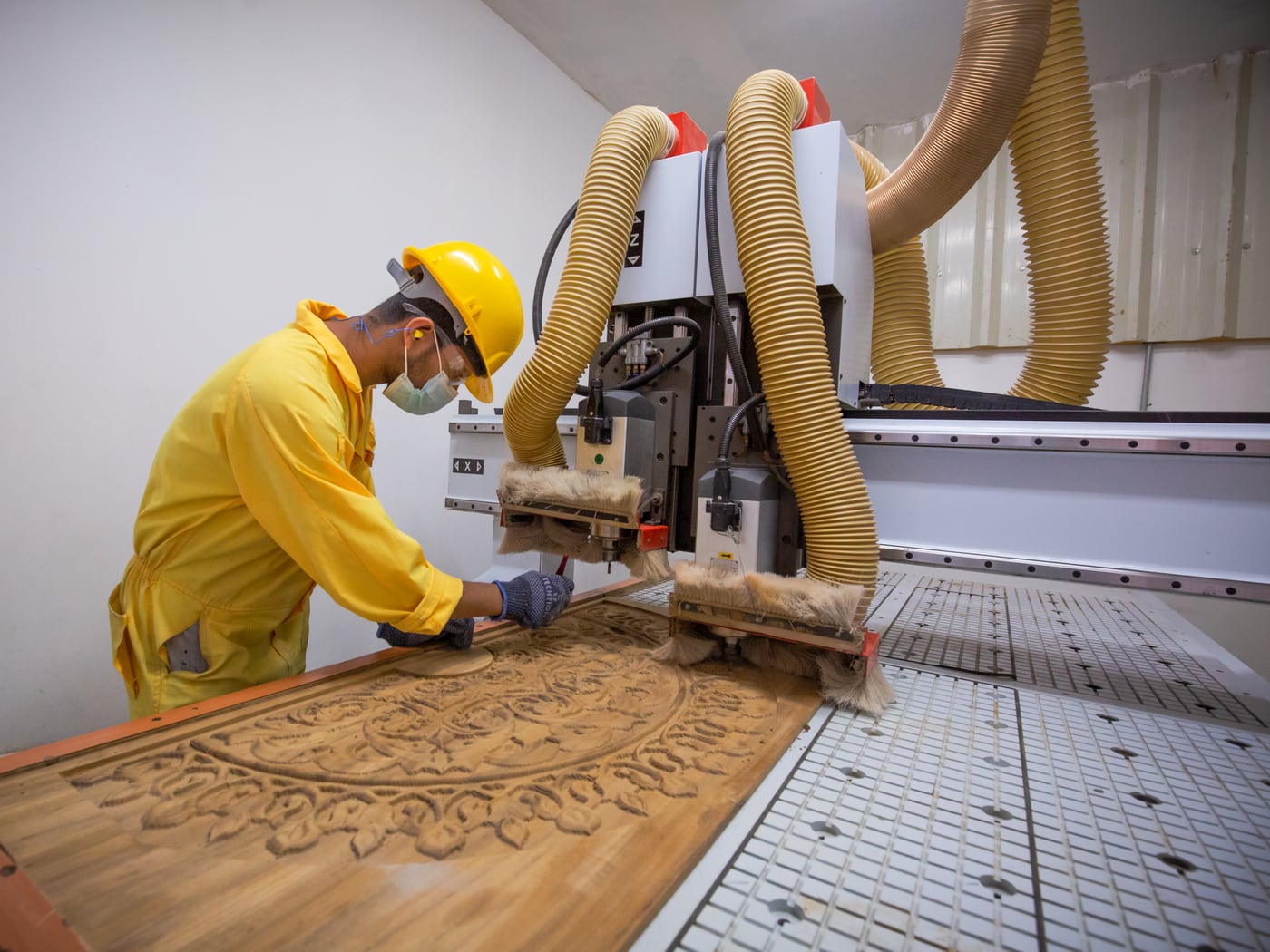
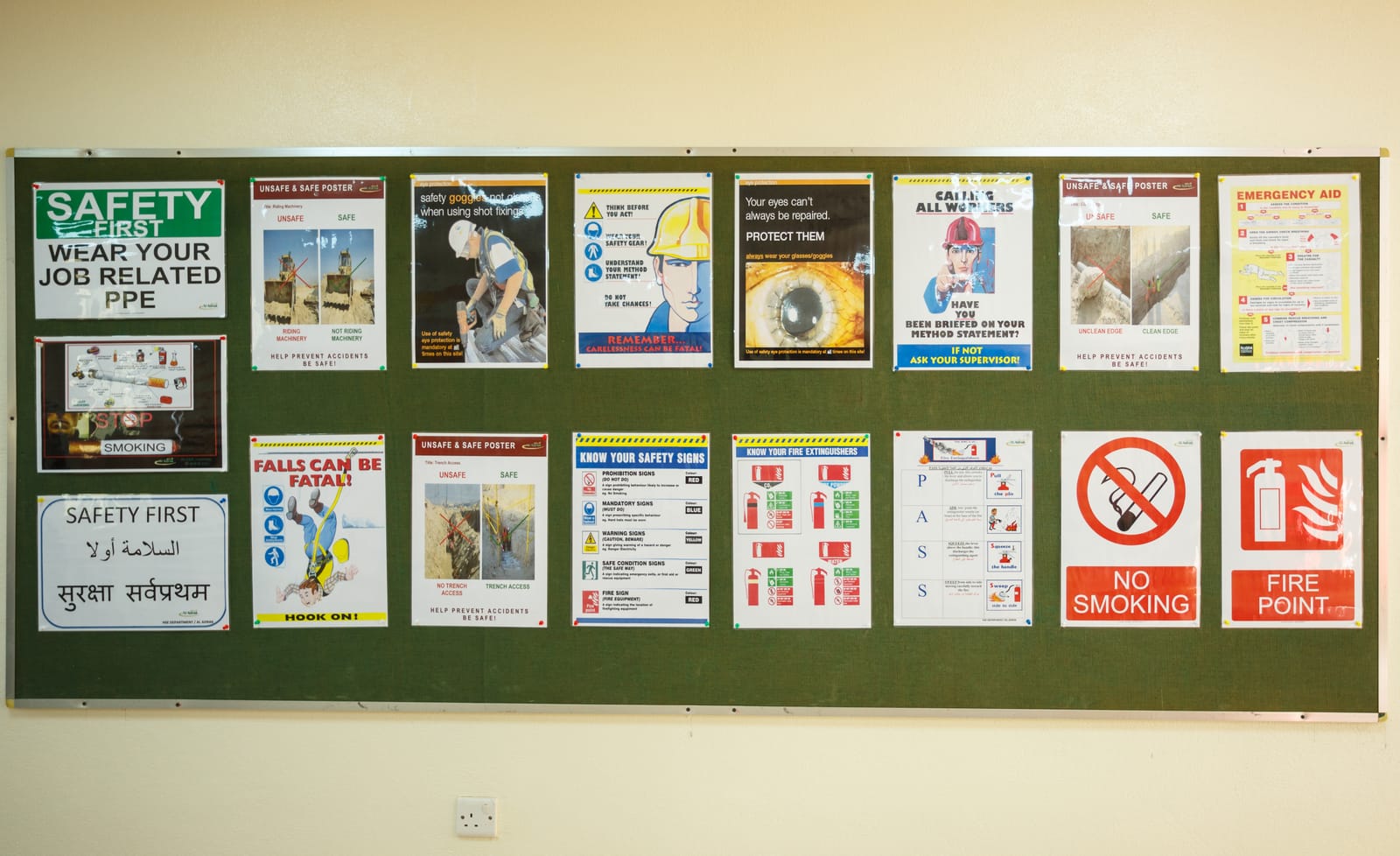
Everything below is the company's own training centre at Halban, photographed as it is used: the hall where inductions and supervisor sessions run, the equipment wall each trade is issued from, the notice board in the languages the workforce actually reads, and the scaffold rig standing in the yard for working-at-height practice. Nothing here is a stock photograph and nothing is a mock-up.
Objectives & targets, 2026
Measured, reviewed, signed at the top
Set by top management, signed by the Chief Executive Director, and reviewed quarterly — the 2026 objectives commit every site to measurable targets. They are deliberately of two kinds: lagging numbers, which count what has already happened, and leading ones, which count the work done to stop it happening at all. The Corporate HSE Executive Committee reviews both monthly, alongside high-potential incidents — the near misses that could have been serious — and the lessons taken from them.
0
Work fatalities — the only acceptable number
0
Lost-time injuries
<1
Lost-time injury frequency, year to date
<0.5
Total recordable case frequency
100%
Compliance with the HSE training matrix
12+
Leadership safety walks each year
The paperwork behind the claim
Certificates & policies
Certified since 2018 · FAHSS, an IAS-accredited certification body · current certificates valid to 16 June 2028. Every document below is the current original — click to read it.
The three standards cover different ground and are held together: 45001 for occupational health and safety, 14001 for environmental management, 9001 for quality. The policies listed beneath them are the documents those systems are actually run on — the life-saving rules every person on site is evaluated against, and the road safety, drug and alcohol, and smoke-free policies that apply to Al Adrak staff and trade contractors alike.
Questions about our HSE standards?
Clients and consultants are welcome to review our policies, method statements and training records.
Contact our HSE team